
El marketing de eventos en 2025 ya no se trata de promoción masiva, sino de crear una historia que conecte emocionalmente con tu audiencia objetivo y los inspire a formar parte de una experiencia transformadora. La clave está en entender profundamente las motivaciones reales de los asistentes y mapear su journey completo, desde el descubrimiento hasta convertirse en embajadores de tu marca. Enfocate en elegir los canales correctos donde tu audiencia ya está presente, priorizando calidad sobre cantidad para maximizar el ROI de tu estrategia comercial.
Feeling stuck with your event marketing strategy? Maybe you have a plan in motion but need fresh inspiration to give it that extra push. In this ultimate event marketing guide, you'll discover specific channels to test alongside actionable tactics for effective marketing. We'll also dive deep into marketing fundamentals: creating a story that resonates with your target audience. Let's get started!
In 2025, successful event marketing is no longer simply about sending calendar invites or flooding social media with promotional posts. That approach just doesn't work anymore...
At its core, event marketing is about creating a story that cuts through the noise and resonates deeply with your audience and potential customers.
What you'll learn in this guide:
How to create a magnetic story for your event that attracts your ideal attendees
The most effective channels for 2025 and how to use them
Practical marketing strategies to generate excitement before, during, and after your events
Tips for measuring and optimizing your commercial strategy
Defining your event story: why it's fundamental in 2025
Remember Red Bull Stratos, the revolutionary stunt where Felix Baumgartner jumped from the edge of space, breaking world records and redefining human potential?
The brilliance of this achievement wasn't just in the spectacle, but in the narrative it created: a story about pushing boundaries and achieving the impossible. This story inspired audiences, aligning perfectly with Red Bull's identity as a brand that gives you wings.
This is the type of emotional and psychological connection that every experiential marketing campaign should strive for.
Your event should aspire to symbolize a crucial moment in your attendees' personal or professional journey. You need to position your offerings not as a simple meeting or one-day conference, but as a transformative experience that becomes a lasting part of your attendees' life story and strengthens your brand.
I know it sounds like a lot... But, like any good story, your event should offer them character development, plot progression, and the promise of a satisfying resolution.
Gone are the days when a simple list of speakers and a schedule could fill a venue. Today's attendees aren't just buying a ticket: they're investing in their own adventure, transformation, and story that they want to add to the book of their own life.
This is why storytelling in event marketing isn't just a "nice-to-have": it's fundamental to your success.
With that clarified, let's dive into how exactly you can make this happen.
Why getting your event story right is so important
1. Stories cut through content saturation
In a world where the average person encounters thousands of marketing messages daily, a well-crafted story helps your events stand out. It's the difference between being another calendar entry and becoming an unmissable experience that strengthens your brand.
2. Stories create emotional connections
When potential attendees connect emotionally with your event's story, they're investing in a narrative they want to be part of. This emotional investment is powerful: it converts prospects into leads and first-time participants into loyal community members who then advocate for your brand.
3. Stories drive action
A compelling story in your event marketing informs and motivates. When people understand not just what your events are but why they matter and how they might impact their lives or careers, they're more likely to take action and register.
How to create a story for your event
To create a story that resonates in your commercial strategy, start by answering these fundamental questions:
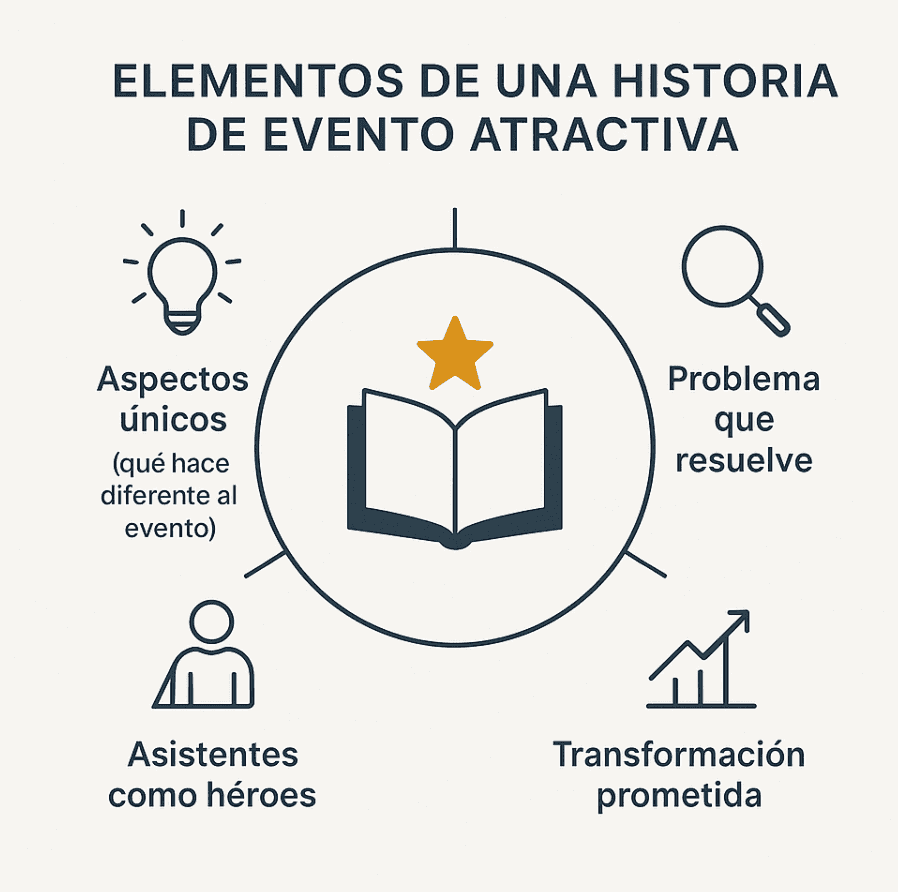
What problem does your event solve? Are you helping companies connect with professionals in a post-pandemic world? Bridging the gap between traditional and emerging industries?
Who are the heroes of your story? (it's your attendees, not your event)
What transformation do you promise? What will attendees be able to do or achieve after your events that they couldn't before?
What makes your event unique? In a sea of similar gatherings, what's your special ingredient that differentiates your brand?
For example, let's say you're organizing a marketing technology conference for businesses. Instead of starting with "Join over 50 speakers discussing the latest MarTech trends," your story could be:
"Join the pioneers who are redefining marketing in the AI era and shaping the future of customer engagement for America's leading companies."
Creating your event's elevator pitch
Once you've defined your story, condense its essence into a compelling elevator pitch. This isn't just a "nice-to-have": it's the foundation of your story that will inform all your marketing materials and communication.
A strong elevator pitch should:
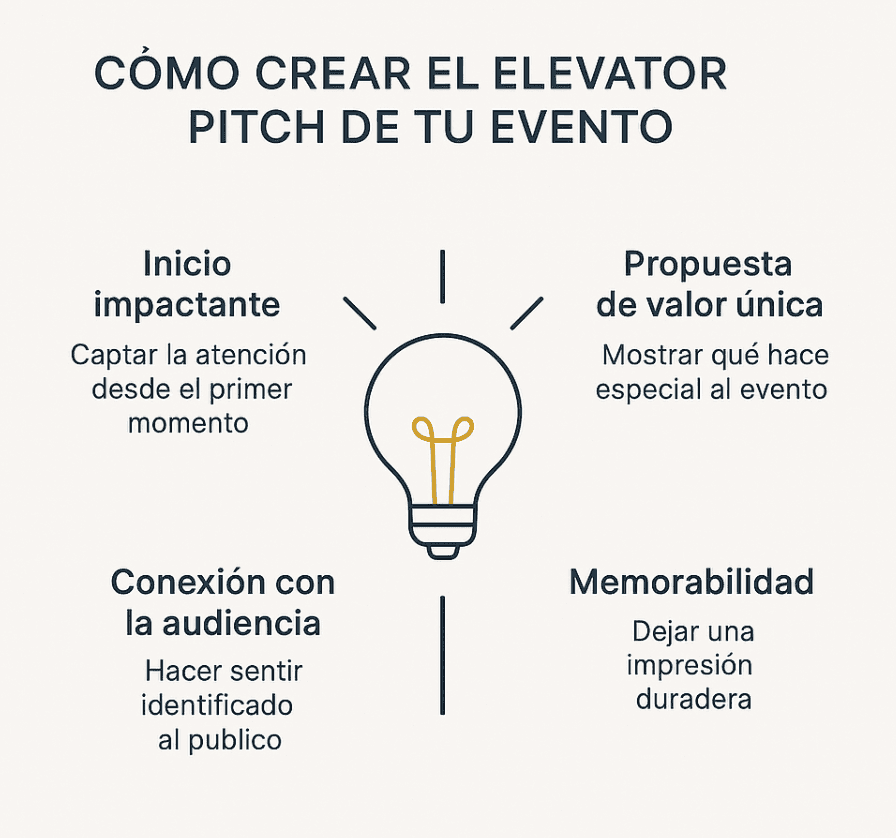
Capture attention in the first sentence
Highlight your unique value proposition and brand differentiation
Speak directly to your audience's aspirations or pain points
Be memorable and repeatable
Your event's story isn't just marketing fluff: it's the north star that guides every marketing decision and brand building effort. Get it right, and you won't just fill venues, but create an experience that resonates long after your events end and creates brand advocates who share your experiences with friends and colleagues.
Really knowing your target audience
Every great storyteller knows one fundamental truth: you can't captivate an audience you don't understand. Just as a screenwriter develops detailed character profiles before writing a single scene, successful event marketing professionals need to deeply understand the key players in their event's story.
Sure, knowing that your target audience is "marketing professionals aged 25 to 45" or "tech startup entrepreneurs" is a start, but it's like describing Harry Potter as just "a British teenager with glasses." The magic is in the details, in the motivations. The things that really drive your attendees.
Diving deeper into your audience's motivations
People rarely share their real reasons for attending events. On the surface, someone might say they're attending to "stay updated with new technologies." But dig deeper, and you'll find the real story: they feel left behind by their peers or are secretly planning a career change.
You need to truly understand these hidden motivations. This is the secret sauce that will allow you to transform your marketing strategies from generic promotion to compelling personal invitations that actually convert leads.
Let's bring this concept to life through the eyes of a potential attendee.
Sarah is a Marketing Manager at a mid-sized company, managing a team of three with a $500K budget. Under her confident exterior, she's grappling with the rapid pace of AI and automation in her industry. Her team is drowning in manual tasks, and she needs to demonstrate ROI to justify a larger budget. Although she'd never admit it in front of her team, she has her sights set on that Director of Marketing position and knows she needs to position herself as an innovative leader who can take the brand to the next level.
For Sarah, your events aren't about learning: they're about transformation. She's not just looking for industry experts; she's looking for mentors who can help elevate her career and her brand's commercial strategy to the next level.
Understanding your audience at this level changes everything about how you promote your events, especially when working with companies or marketing professionals.
Your email marketing campaigns speak to their aspirations, not just their job titles
Your social media tells transformation stories, not just event logistics
Your networking sessions create opportunities for meaningful connections between companies, not just business card exchanges
The attendee journey: building your event's story
Every great story has a clear path from beginning to end. In event marketing, that path is your attendee journey: the route your potential participants take from first hearing about your events to becoming enthusiastic advocates and brand ambassadors.
Think of your attendee journey like a Netflix series: they never just jump from the pilot episode to the season finale. There are crucial developments like plot twists and emotional peaks along the way. Similarly, your event marketing needs to follow this pattern, creating a compelling narrative that guides people through each decision stage, ultimately enriching your sales funnel and strengthening your brand.
1. Understanding who's involved in ticket purchasing
The decision to attend an event is rarely made by one person in isolation. Depending on the types of events, several stakeholders might be involved:
For corporate events:
The employee who wants to attend
Their manager who must approve time off
Finance who must approve the budget
The marketing or development team evaluating ROI
For public events:
The primary attendee
Friends or family who might join
Partners who influence leisure time and budget decisions
Your marketing needs to speak to each of these people. It's not enough to convince just the primary attendee: you need to provide the tools and messages that help secure approval from all involved parties.
2. Mapping the journey stages - Phase 1: Discovery
Stage 1: Awareness - "This exists" Your audience discovers your events for the first time. They might see it on social media, hear from a colleague from another company, or stumble upon your website.
Key marketing for this stage:
Social media advertising with broad reach
PR and specialized marketing media coverage
Content marketing (blog posts, videos)
Referral programs for companies
Stage 2: Consideration - "Is this for me?" They're evaluating whether your events align with their needs, interests, budget, and brand objectives.
Key marketing for this stage:
Detailed program content
Profiles of speakers/performers recognized in marketing or your industry
Testimonials from previous attendees and participating companies
FAQs and educational content
Case studies of companies that benefited
Stage 3: Decision - "I'm ready to buy" They've decided to attend and are ready to complete their registration.
Key marketing for this stage:
Simplified checkout process
Multiple payment options (Stripe, credit cards, ACH, Apple Pay)
Early bird discounts or limited-time offers
Clear urgency messages without sacrificing brand perception
Phase 2: Post-purchase and experience
Stage 4: Post-purchase - "I made the right choice" They've bought their ticket and are waiting for the event.
Key marketing for this phase:
Confirmation and welcome emails with strong brand identity
Regular updates about your organizations
Community building (private groups, forums)
Anticipation-building content
Stage 5: Experience - "I'm here" They're attending your event.
Key marketing for this stage:
Real-time social media content
Livestreaming for those who couldn't attend
Photogenic experiences for sharing that reinforce your brand
Active engagement with event hashtags
Stage 6: Post-event - "That was incredible" The event has ended, but their journey and relationships with your brand continue.
Key marketing for this stage:
Thank you emails
Recap content (videos, photos)
Satisfaction surveys
Early bird offers for the next event
Choosing your marketing channels: where to find your audience
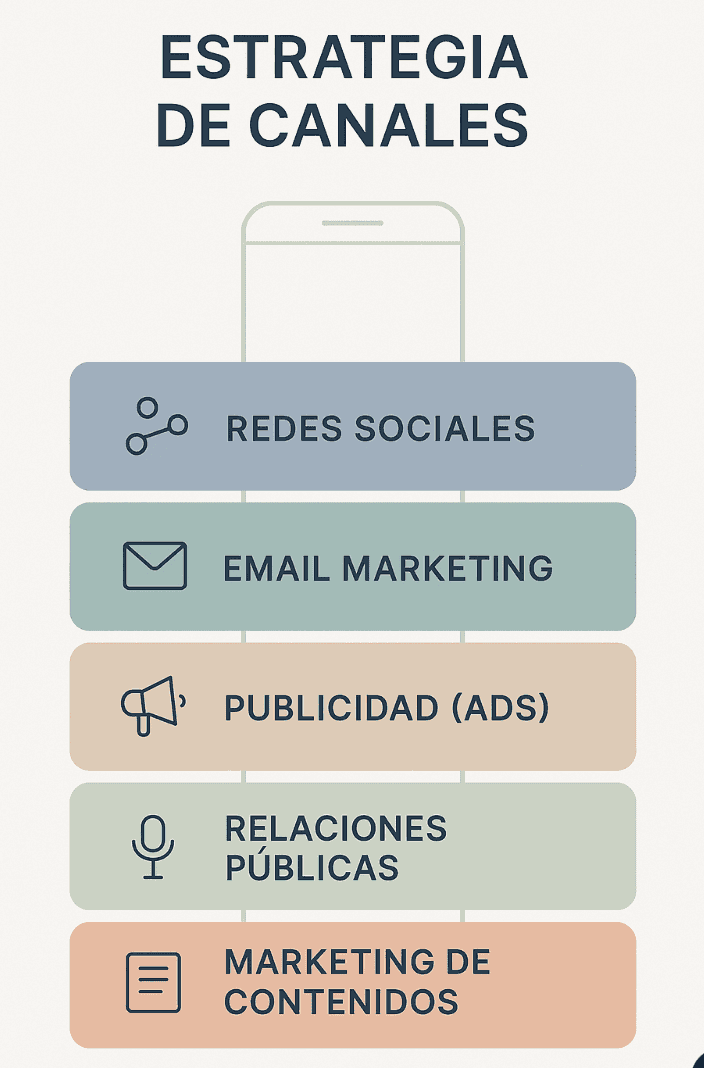
Not all marketing channels are created equal, and understanding where your audience spends their time is crucial for maximizing your marketing ROI. In 2025, successful event marketers focus on quality over quantity, selecting channels that align with their audience's behavior and preferences.
Whether you're promoting music festivals like Coachella, tech conferences like SXSW, or corporate events, the key is matching your channel strategy to your audience's media consumption habits and professional networks.
¿Qué es el event marketing y por qué es importante en 2025?
El event marketing en 2025 va mucho más allá de mandar invitaciones al calendario o inundar las redes sociales con publicaciones promocionales. Se trata de crear una historia que rompa el ruido y conecte profundamente con tu audiencia y clientes potenciales. El marketing de eventos exitoso consiste en posicionar tu evento no como una simple reunión o conferencia, sino como una experiencia transformadora que se convierte en parte duradera de la historia de vida de los asistentes y fortalece tu marca. En un mundo donde la persona promedio se encuentra con miles de mensajes de marketing diarios, una historia bien elaborada ayuda a que tus eventos se destaquen.
¿Cómo crear una historia convincente para mi evento?
Para crear una historia que resuene en tu estrategia comercial, tenés que responder estas preguntas fundamentales: ¿Qué problema resuelve tu evento? ¿Quiénes son los héroes de tu historia (son los asistentes, no tu evento)? ¿Qué transformación prometés? ¿Qué podrán hacer o lograr los asistentes después de tus eventos que no podían antes? ¿Qué hace único a tu evento? Por ejemplo, en lugar de empezar con 'Unite a más de 50 speakers discutiendo las últimas tendencias MarTech', tu historia podría ser: 'Unite a los pioneros que están redefiniendo el marketing en la era de la IA y moldeando el futuro del engagement de clientes para las empresas líderes de América'.
¿Cuáles son las etapas del customer journey en marketing de eventos?
El journey del asistente tiene seis etapas clave. Fase 1 - Descubrimiento: Etapa 1 Awareness (descubren tu evento por primera vez), Etapa 2 Consideración (evalúan si se alinea con sus necesidades), Etapa 3 Decisión (están listos para comprar). Fase 2 - Post-compra: Etapa 4 Post-compra (confirmaron su asistencia y están esperando), Etapa 5 Experiencia (están asistiendo al evento), Etapa 6 Post-evento (el evento terminó pero su relación con tu marca continúa). Cada etapa requiere estrategias de marketing específicas, desde publicidad en redes sociales y contenido de referencia hasta emails de confirmación y ofertas early bird para el próximo evento.
¿Por qué es crucial entender las motivaciones profundas de mi audiencia?
La gente rara vez comparte sus razones reales para asistir a eventos. En la superficie, alguien podría decir que asiste para 'mantenerse actualizado con nuevas tecnologías', pero si profundizás, encontrás la verdadera historia: se sienten quedados atrás respecto a sus pares o están secretamente planeando un cambio de carrera. Entender estas motivaciones ocultas es la salsa secreta que te permite transformar tus estrategias de marketing de promoción genérica a invitaciones personales convincentes que realmente convierten leads. Cuando entendés a tu audiencia a este nivel, tus campañas de email hablan a sus aspiraciones, no solo a sus títulos de trabajo, y tus sesiones de networking crean oportunidades para conexiones significativas entre empresas.
¿Qué elementos debe incluir un elevator pitch efectivo para mi evento?
Un elevator pitch sólido debe capturar la atención en la primera oración, destacar tu propuesta de valor única y diferenciación de marca, hablar directamente a las aspiraciones o puntos de dolor de tu audiencia, y ser memorable y repetible. No es solo algo 'lindo de tener': es la base de tu historia que informará todos tus materiales de marketing y comunicación. Tu elevator pitch debe condensar la esencia de tu historia en una propuesta convincente que sirva como estrella del norte para guiar cada decisión de marketing y esfuerzo de construcción de marca.
Tags